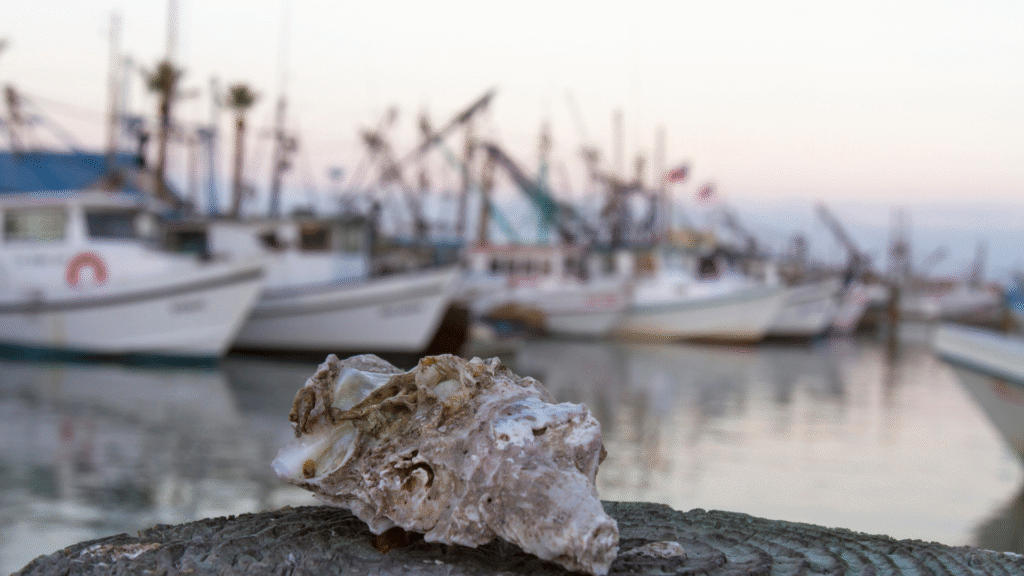
Every fall, as the summer crowds thin and coastal towns settle into a slower rhythm, another season begins. It’s one that has quietly shaped Worcester County, Maryland’s economy for generations: oyster season.
Running from October through March, Maryland’s wild oyster harvest and its expanding aquaculture sector are more than seasonal traditions. They are economic drivers that power small businesses, sustain working waterfronts, protect coastal ecosystems, and reinforce Worcester County’s role as a leader in sustainable seafood on the Eastern Shore.
A Way of Life and a Living
Worcester County’s proximity to productive estuaries like Chincoteague Bay, Newport Bay, and the Pocomoke River creates ideal conditions for oyster harvesting. For generations, local watermen have made their living navigating these waterways, many of them launching from marinas in South Point, Bishopville, and West Ocean City.
Whether wild-caught or farm-raised, oysters are part of a larger maritime economy that includes crabbing, clamming, fishing, and marine trades. These businesses are often family-run, passed down through generations, and rooted in tradition. Yet they are also entrepreneurial, requiring knowledge of regulations, equipment maintenance, and the shifting conditions of the Chesapeake and Coastal Bays.
“We’re farming oysters in a way that helps clean the water and sustain local jobs. It’s not just about the oysters, it’s about building something that lasts here on the Shore,” said John Apple, owner of Archer Oyster Co. in Worcester County.
Source: DelmarvaNow
Aquaculture and the Future of Coastal Resilience
In recent years, oyster farming has gained momentum across Maryland’s Lower Eastern Shore, including Worcester County. Private leaseholds, floating cages, and bottom farms are becoming common, thanks to support from programs like the Maryland Department of Natural Resources Shellfish Aquaculture Program and the Oyster Recovery Partnership.
Local farms such as Archer Oyster Co. in South Point are helping lead the way. They are raising oysters in clean, tidal waters just offshore, contributing to both the local economy and the health of the bay.
Baywater Seafood, located in Public Landing on the Chincoteague Bay, is another example of local aquaculture in action. They harvest and sell shellfish raised in Worcester County’s pristine coastal waters.
Aquaculture also supports year-round jobs in hatchery operations, marine mechanics, logistics, and shoreline restoration. Shell recycling programs and workforce training help ensure the next generation of marine professionals is equipped to carry this legacy forward.
From Bay to Business
Once harvested, oysters travel quickly through a vibrant local supply chain. They are delivered to processors, shucked at raw bars, sold at seafood markets, and featured on menus from Ocean City to Washington, D.C.
Local businesses like Skillagee Seafood offer dock-to-table options, while restaurants such as The Shrimp Boat and Berlin’s seasonal seafood pop-ups bring fresh oysters to the plate.
We strongly encourage you to support our local economy by purchasing oysters and other shellfish directly from local watermen, seafood markets, and aquaculture businesses. Buying locally not only ensures freshness and quality, but also helps sustain our coastal communities and preserve the heritage of our working waterfronts.
Oyster season supports more than restaurants. It also boosts:
- Caterers and food distributors
- Ice houses, bait shops, and marine service businesses
- Raw bar events and seafood festivals, including Ocean City’s Seafood Festival at Northside Park and Shell Shocked at Fager’s Island
- Culinary tourism routes like the Maryland Crab & Oyster Trail – Lower Shore
Sustainability That Works
Oysters offer environmental benefits that go far beyond the plate. As natural filter feeders, they clean the bay by removing algae, nitrogen, and sediments. One adult oyster can filter up to 50 gallons of water per day.
Oyster reefs also protect shorelines from erosion, create habitat for marine life, and contribute to the long-term health of Maryland’s Coastal Bays. Local nonprofits such as the Maryland Coastal Bays Program partner with schools, businesses, and oyster farms to support habitat restoration, shell recycling, and environmental education.
This balance of ecology and economy is one of Worcester County’s greatest assets.
A Smart Investment in the Eastern Shore
Consumer demand for sustainable, locally sourced seafood is growing. Worcester County, with its blend of traditional watermen and forward-looking oyster farmers, is positioned to lead the way.
Whether you are a seafood wholesaler, restaurant owner, or conservation-minded investor, the message is clear. The future of coastal food production is rooted in places like Worcester County, Maryland.
Oyster season is not just a harvest window. It is a time of opportunity, innovation, and community investment. From small marinas and family-owned boats to chefs, wholesalers, and restoration specialists, Worcester County’s working waterfront is alive and thriving.
So the next time you enjoy a fresh oyster on the half shell or see a boat heading out at sunrise, remember: you are witnessing the story of one of the most vital and enduring industries on Maryland’s Coast.