History, Heritage, and Outdoor Exploration in Worcester County
As Maryland prepares to commemorate 250 years since the signing of the Declaration of Independence, communities across the state are reflecting on the places, people, and stories that shaped the journey. The statewide Maryland 250 initiative sets the framework for this milestone, while Lower Shore 250 brings that celebration closer to home by highlighting the unique history, culture, and landscapes of Maryland’s Lower Eastern Shore.
In Worcester County, history is not confined to exhibits or archives. It lives in our towns, waterways, historic sites, and working landscapes. Maryland 250 offers an opportunity to experience that history where it happened while inviting residents and visitors alike to explore the county in active and meaningful ways.
Worcester County’s Role in Maryland’s Story
Worcester County is home to a remarkable collection of historic places that reflect Maryland’s development from colonial settlement through early industry and community growth.
The Rackliffe House near Assateague Island offers insight into 18th-century coastal life and early settlement along the bays. Makemie Memorial Presbyterian Church honors the legacy of Reverend Francis Makemie and the roots of religious freedom on the Eastern Shore. St. Martin’s Episcopal Church Museum in Showell preserves one of the county’s oldest surviving church buildings, providing a glimpse into early parish life.
Historic downtowns in Berlin and Snow Hill further tell the story of how commerce, agriculture, transportation, and community shaped the Lower Shore over generations. These walkable districts showcase preserved architecture and a strong sense of place that continues to support local businesses and cultural life today.
Industry, Innovation, and Early Enterprise at Furnace Town
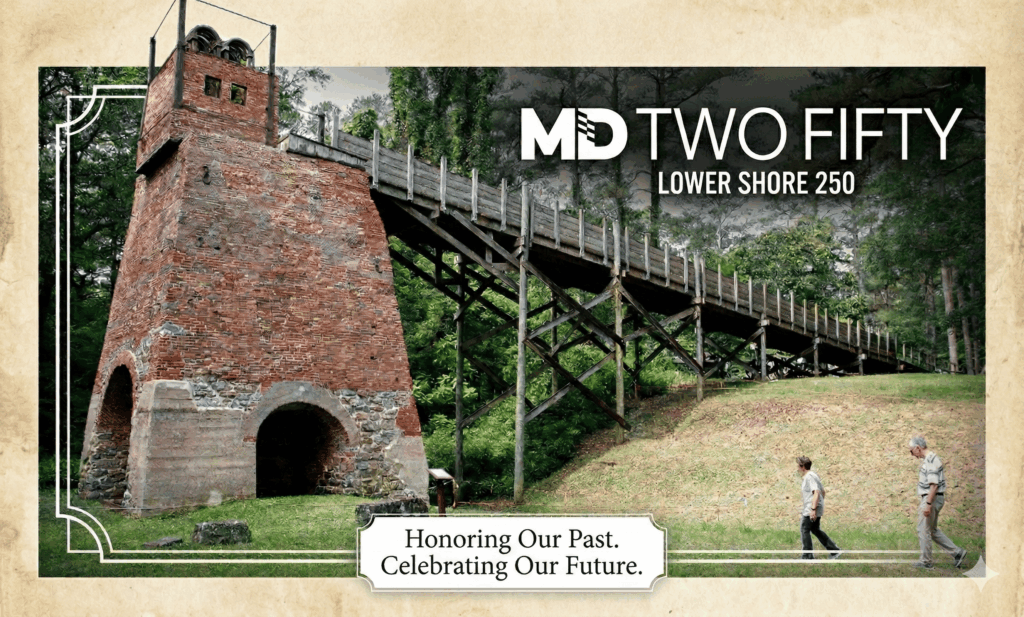
Near Snow Hill, Furnace Town Historic Site highlights another important chapter of Worcester County’s past. Established around an iron furnace operation in the early 1800s, Furnace Town reflects a time when industry, natural resources, and skilled labor played a central role in regional growth.
Built around the Nassawango Iron Furnace, the village once supported agriculture, construction, and commerce throughout the area. Today, Furnace Town brings this history to life through restored buildings, immersive demonstrations, and educational programming. As part of Maryland 250, the site offers a hands-on way to explore early American industry and the everyday lives of the people who helped build the region.
Main Street Stories and Berlin’s Peach Legacy
Worcester County’s history is also being recognized on a national stage through Main Street America’s Main Street 250 project. This initiative highlights local stories that communities know well but are often overlooked beyond their borders.
Downtown Berlin is featured for its peach-growing legacy, a story that illustrates how small towns played a critical role in feeding the nation and driving economic development in the late 1800s. Berlin was once a major hub for peach cultivation and shipping, with wagonloads of fruit arriving from surrounding farms to be packed and shipped by rail to markets along the East Coast.
That prosperity helped shape Berlin into the vibrant community it is today. The story, supported by research from the Calvin B. Taylor House Museum, connects local agriculture, entrepreneurship, and Main Street development in a way that reflects the broader American experience.
As part of the Maryland 250 celebration, Main Street America encourages member communities to contribute their own stories, helping to put more places like Worcester County on the national map.
Learning and Preserving History Through Local Programs
Local organizations are also playing an important role in connecting residents to Maryland 250. The Worcester County Library System is offering a series of public programs running through 2026 that explore colonial America, Worcester County’s role during the Revolutionary era, and the region’s early history before European settlement. These programs provide accessible ways for residents to deepen their understanding of the county’s past.
The Calvin B. Taylor House Museum in Berlin is preparing special exhibits and programs for 2026 that will focus on the town’s evolution and renaissance over time. Plans include a multimedia walking tour highlighting Berlin’s historic industries and a new exhibit using archival photographs to show how community effort shaped the town’s transformation.
In Snow Hill, the launch of a Citizens Academy aligns with the spirit of Maryland 250 by encouraging civic engagement and education. The free program introduces residents to local government, public services, historic preservation, and economic development, reinforcing the idea that understanding the past helps inform the future.
Getting Outside With Miles for Maryland
Maryland 250 is not only about reflection. It is also about participation. The Miles for Maryland challenge, led by the Maryland Department of Natural Resources, encourages people to log 250 miles in Maryland State Parks through walking, hiking, paddling, or other outdoor activities. Worcester County is well-positioned for this challenge. Pocomoke River State Park, Assateague Island, and surrounding public lands offer miles of trails, waterways, and natural scenery that connect outdoor recreation with the landscapes that have shaped local history. Individuals, families, schools, and organizations can turn the challenge into seasonal goals, friendly competitions, or group outings that celebrate both personal well-being and shared heritage.
A Living Celebration of Place
Maryland’s 250th anniversary offers more than a look back. It invites people to engage with history as a living part of everyday life. In Worcester County, that means walking historic downtown streets, exploring preserved sites, participating in educational programs, and getting outside to experience the land and waterways that continue to define the region.
Through Maryland 250 and Lower Shore 250, Worcester County is celebrating its past while creating opportunities for connection, exploration, and community engagement that will carry forward well beyond this milestone year.