Worcester County, Maryland, isn’t just a place we live; it’s a place we love. It’s where Ocean City meets open farmland, where bald eagles nest along the Pocomoke, and where wild ponies roam beside weekend travelers. Maryland’s Eastern Shore has always been about balance: land and water, farming and fishing, tourism and tradition. That same balance now guides how Worcester County, MD, grows its economy.
Here, development doesn’t mean paving over wetlands. It means building opportunities while protecting the very things that make this place special. And increasingly, businesses are finding success by doing both.
Maryland Tourism Events That Reflect the Landscape
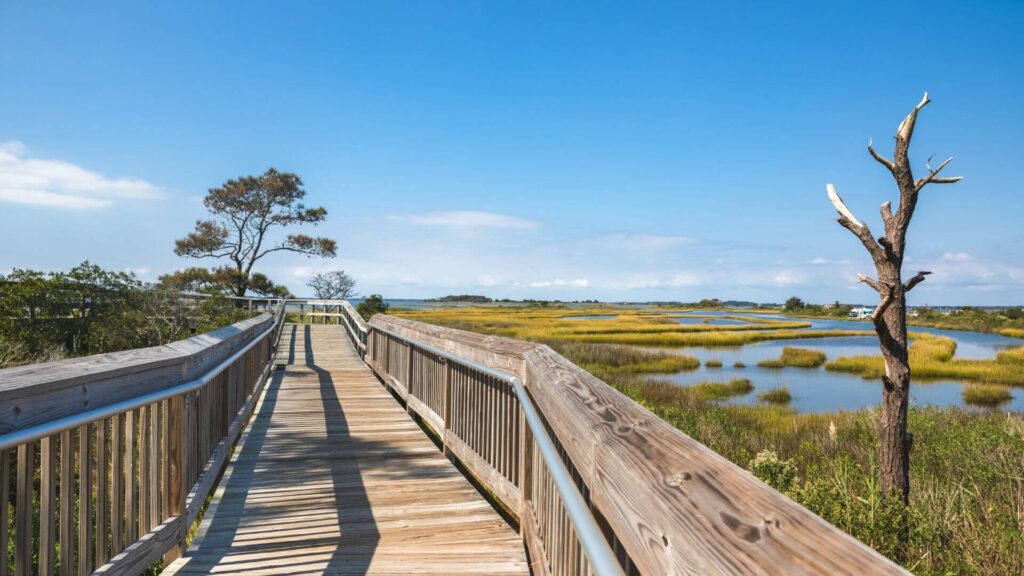
With more than 8 million annual visitors and over 11,000 hotel rooms, Ocean City, MD, drives a huge part of the local economy. But our greatest long-term tourism asset is nature. Coastal habitats, wildlife, and wide-open spaces inspire a growing number of off-season visitors: birders, paddlers, photographers, and stargazers.
Events like Delmarva Birding Weekends, Bay Day, and local area farmers’ markets help extend the tourism season well beyond the summer months. Guided night photography workshops at Assateague, OC Bay Hopper’s Sunset Seabird Safaris, and Chesapeake Classrooms by the Chesapeake Bay Foundation invite visitors to connect with the outdoors through learning and exploration.
Major events like the OC RV & Van Lifestyle Show and OC Seaside Boat Show attract thousands of outdoor enthusiasts who want to live, camp, paddle, and fish in places like this. These events don’t just sell gear, they spark awareness and appreciation for what makes Worcester’s outdoors so special.
These eco-tourists stay in local hotels, shop downtown, and support conservation just by showing up.
Local Businesses Rooted in the Outdoors
Across Worcester County, small businesses are building livelihoods around the land and water. Kayak outfitters like OC Kayak, Pocomoke River Canoe Company, and Assateague Outfitters connect locals and visitors with some of Maryland’s most scenic paddling routes. Boat tours and fishing guides offer hands-on access to the bays and marshes, while birding guides help visitors see and appreciate the wildlife that calls this place home.
Golf courses have long understood the importance of environmental stewardship. Eagle’s Landing, for example, is Audubon-certified and has led the way in using natural methods to keep greens healthy while protecting local wildlife habitat. For many golfers, the game becomes an unexpected lesson in land care.
Agritourism continues to grow as well. Farms are opening their gates for fall festivals, hayrides, and educational events. Goat Plum Tree Farm in Berlin hosts mushroom foraging classes and naturalist workshops that blend biology with culinary fun. Farmers’ markets in Berlin extend into the fall, while Ocean Pines hosts the only year-round farmers’ market in Worcester County, offering fresh produce, handmade goods, and a direct connection to local growers.
At Mariner’s Country Down, a 600-acre property supports artisan studios, forest trails, and farm plots for aspiring growers. It’s a model for how rural land can be used creatively without losing its character. Other farms across the county are reimagining their space as event venues, hosting weddings and celebrations that allow people to say “I do” surrounded by the very land they love.
Historic Furnace Town also offers a powerful example of place-based connection. With its open-air museum, nature trails, and seasonal events, it invites locals and visitors to explore the intersection of history, culture, and nature.
Conservation, Education, and Community Impact
Worcester’s environmental spirit is powered by everyday people. Groups like OC Beach Heroes have seen a surge in off-season volunteers, visitors, and locals alike, who show up for weekly beach cleanups. The OC Surf Club combines youth mentorship with environmental stewardship. And Go Green OC is helping reduce food waste through a growing composting initiative in the restaurant scene.
Meanwhile, outdoor education is thriving. in 2025, regional leaders gathered at the MAEOE Annual Conference in Ocean City, where more than 500 educators explore how to bring nature into the classroom. Family-friendly programs like Storybook Walk at Bayside Park and Sunset Park’s birding programs make it easy for kids and adults to experience the outdoors together.
Smart land use plays a big role too. Parks and greenways are expanding not only for recreation, but for climate resilience and ecological health. Initiatives like the Ilia Fehrer Nature Preserve, living shorelines at Homer Gudelsky Park, and restoration efforts along the Pocomoke are proof that environmental investment supports long-term community wellbeing.
Programs like Chesapeake Classrooms bring teachers into the field so they can return to their schools with real-world science and stewardship lessons. The result is a community that doesn’t just grow economically, it grows in its connection to nature.
Nature Powers Our Growth
Smart growth here isn’t just a strategy, it’s a lived value. Land-use planning helps guide development into town centers while preserving rural and coastal landscapes. Programs like Rural Legacy grants and conservation easements ensure that growth doesn’t come at the expense of open space.
Why It All Matters
In Worcester County, MD, we don’t have to choose between growth and preservation. Our economy thrives not in spite of our natural assets, but because of them. We build thoughtfully, care deeply, and create space for people, businesses, and nature to thrive together.
This is about more than just economics. It’s about humanity getting back in touch with nature. It’s about belonging to the landscape instead of conquering it. When people feel connected to the land, when they see themselves as part of it, not separate, they take better care of it. And in doing so, they create stronger, more rooted communities.
As Worcester County, MD continues to grow, conversations around how to protect its most cherished coastal views, rural landscapes, and habitats are more important than ever. That includes thoughtful debates around offshore development and large-scale solar projects. For many residents, protecting farmland from industrial-scale solar fields and safeguarding our ocean views from turbines isn’t just about policy, it’s about preserving what makes this place feel like home. At the heart of it all is one guiding belief: nature is not something to be sacrificed, but something to stand with.
Whether you’re paddling a quiet stretch of the Pocomoke, learning to forage on a fall farm, or gazing at the Milky Way from Assateague, these moments shape how people experience this place and why they choose to stay, visit, or invest.
Maryland’s Coast is a place where nature and people continue to shape one another, and where the future feels as rooted as the past.